

When Does a Car Need Paint Correction?

Updated: Sep 15
When Does a Car Need Paint Correction?
Dull paint with visible swirl marks often shows that your vehicle's clear coat has sustained surface damage. On the Mississippi Gulf Coast, salt air, humidity, pollen, heat, and beach traffic can make a clean finish harder to maintain. Restoring clarity starts with identifying the type and depth of each defect.
When does a car need paint correction? Consider it when normal washing no longer restores clarity and you can see swirl marks, oxidation, haze, water spots, or light surface defects in the clear coat. Paint correction uses careful machine polishing to improve eligible defects and restore a more even reflection. Because correction removes a small amount of clear coat, the right approach depends on the paint's condition, the defect depth, and your goals. It is not a routine service that every vehicle needs on a fixed schedule.
A close inspection can help you separate defects that polishing may improve from chips, deep scratches, or failing clear coat that need a different repair. It also helps you choose the right protection after correction. First, look for the signs that your paint needs more than a wash or wax.
When does a car need paint correction?
Deciding when to get paint correction depends on the state of your car rather than its age. Many people think a new car is perfect, but even new cars can have surface issues from shipping or bad wash habits. Detailing for your vehicle often starts with a close check of the paint under bright light. If your paint looks dull or has visible marks, it is likely time for professional help.
Swirl marks and light scratches
Swirl marks are very common and often come from poor wash methods. These marks look like spider webs or small circles when light hits the surface. Clearcoats on cars are prone to these tiny scratches which dull the look of the paint. If you see these marks on your hood or doors, paint correction can level the clearcoat to remove them.
Oxidation and hazy paint
Living on the Mississippi Gulf Coast means your car faces salt air and high heat. These factors can cause oxidation, which makes the paint look cloudy or white. This haze happens when the clearcoat breaks down from too much sun and salt. Professional detailing services use correction to strip away this dead layer and bring back the original shine.
Water spots and etching
Coastal humidity and rain can leave water spots that do more than just sit on top of the paint. If left too long, minerals from the water can etch into the surface. These spots create small pits in the clearcoat that a simple wash cannot fix. Correction is needed to smooth out the surface and prepare it for protective follow-up options like ceramic coating.
What happens during paint correction?
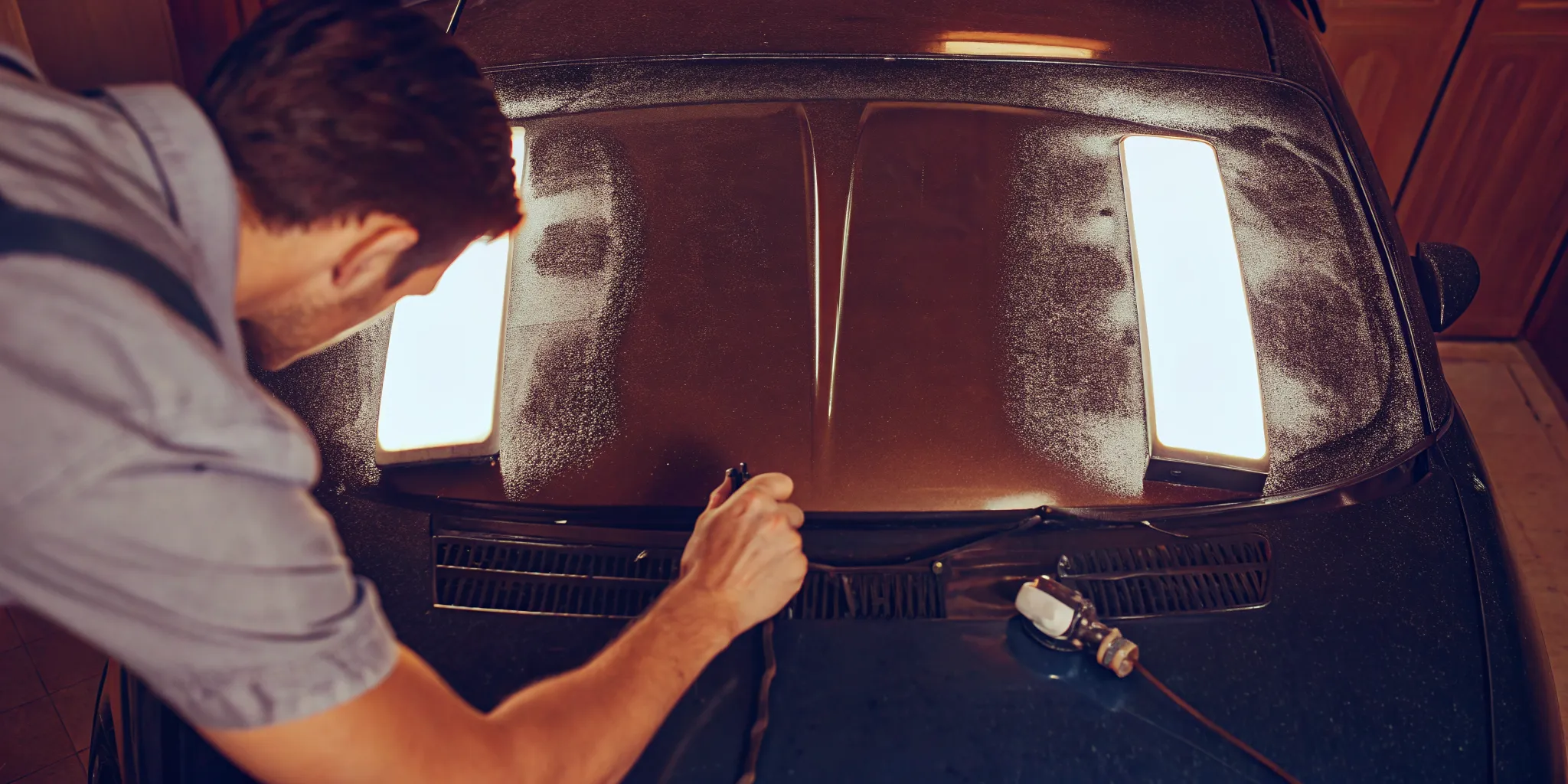
Bright inspection lighting helps reveal swirl marks, haze, and light surface defects.
Paint correction is a deep process that fixes the top layer of your car's paint. It removes marks like swirl marks and light scratches. You may ask when does a car need paint correction if the paint still looks good. This often happens when you see fine lines in the sun. Getting detailing for your vehicle is the best way to fix these marks and restore the shine. This process uses special tools and liquids to level the paint and bring back the glow.
The goal is to make the paint smooth again. When paint is smooth, light bounces off it in a straight line. This is what creates that deep shine. When there are marks in the paint, light scatters and makes the car look dull. Removing these marks takes time and skill. Pros must be careful not to remove too much of the top layer. This layer is what keeps the color from fading in the hot sun.
Finding the right plan
Every car has a different past. A pro starts by checking the paint's health. They look for deep marks that might need more work. They also measure how thick the clearcoat is. This step is vital to keep the paint safe. Clearcoat protects the color but can break down over time. Using an inspection tool helps pros find marks that are hard to see with the eye. This makes sure your car gets a great finish without hurting the paint.
The inspection also checks for things like bird droppings or water spots. In places like Biloxi and Gulfport, salt air can cause marks to etch deep into the paint. A pro will see how deep these marks go. They will decide if the marks can be removed or just made to look better. This plan makes sure the work is safe for the car. It helps avoid taking off too much clearcoat, which could lead to paint failure later.
Steps for a flawless finish
The process follows a set path to get the best look. Experts use many tools to reach a deep shine. Here is what you can expect during the work:
- Deep wash and cleaning.
The car gets a deep wash to remove dirt and tar. Pros use a clay bar to pull out bits of metal or sap stuck in the paint. This makes the surface feel smooth before the buffing starts.
- Paint inspection and test spot.
The detailer checks the paint under bright lights. They try a small spot first to find which pads and polishes work best for your car. This helps them find the right mix to fix the marks without overworking the paint.
- The cutting phase.
This step uses a gritty liquid to level the surface. It removes deeper marks and swirl marks from the clearcoat layer. This is where most of the fixing happens. It can take several hours to do the whole car.
- The polishing phase.
A finer polish removes any haze from the first step. This part brings out the deep gloss and makes the paint look new again. It gives the paint a mirror-like finish.
- Final cleaning.
The car is wiped down to remove all oils and dust. This makes sure the surface is ready for a shield or coating. Any leftover polish could stop a coating from sticking properly.
Expert work is fit to each car. Some cars only need a light polish. Others may need two or three steps to fix deep damage. Detailers focus on keeping clearcoat thickness while removing marks. This keeps the paint strong for years to come. This helps the car look good in the coastal air.
Protecting the results
Once the paint is level and smooth, it needs a shield. Without protection, the Gulf Coast air can quickly dull the shine again. Damp air and salt are tough on bare paint. Applying a shield keeps the gloss high and makes washing easier. It helps the paint resist new marks from dirt.
Many owners choose protective follow-up options like ceramic coating after the work is done. This coating bonds to the paint. It adds a hard layer that resists chemicals and bird droppings. It also keeps the surface smooth, which helps prevent new swirl marks from forming. A good coating can last for years and keeps your paint in top shape.
Paint correction vs. washing, waxing, and ceramic coating

Machine polishing carefully levels eligible clear coat defects to restore clarity.
Most car owners on the Mississippi Gulf Coast want their vehicles to look great. But with many terms like detailing, waxing, and paint correction, it is hard to know what your car needs. Each service has a clear goal. Some clean the top, while others fix deep issues or give lasting armor. Knowing the difference helps you choose the best care for your ride.
Daily care and surface cleaning
A basic wash is the first step in any car care plan. Its main job is to remove loose dirt, dust, and salt from the road. In our coastal area, salt air and damp air can quickly build up on your car. Regular washing helps keep these things from sitting on your paint. But a wash alone cannot fix swirl marks or light scratches. It only cleans what is on top of the paint.
If your car still looks dull after a wash, it may have surface defects. Tiny marks scatter light and make the paint look hazy. This is often when does a car need paint correction to restore clarity. Find a nearby wash through our locations and pricing page for routine cleaning.
Temporary gloss and surface sealing
Wax and sealants add shine and temporary protection. They can make the surface feel slick and help contaminants release during cleaning. Their durability depends on the product, preparation, weather, and maintenance.
It is vital to know that wax does not remove flaws. It only hides them for a short time. If your paint has swirl marks from bad washing, the wax will just sit on top of them. To truly fix the look, you need a way to level the clearcoat. Studies show that clearcoat scratch strength is a key part of how your car's surface stays strong. Without fixing the surface first, you are just covering up the problem. This can lead to more damage as dirt gets trapped in those small marks.
Deep fixing and long term shielding
Paint correction is a multi-step process. It uses abrasives and polishing tools to level a small amount of clear coat. It can improve eligible swirl marks, water spots, and light scratches. A test spot helps determine a safe approach before work continues across the vehicle.
After correction, protection helps maintain the improved finish. Ceramic coating can add gloss and make routine cleaning easier, but it does not prevent every scratch or chip. Learn about Classy Chassis ceramic coatings as a possible protective follow-up.
Service | Main Purpose | What it Fixes | When to Choose It |
Basic Wash | Clean the top | Loose dirt and salt | For routine cleaning |
Wax or Sealant | Short-term shine | Small dull spots | For temporary protection |
Paint Correction | Fix the surface | Swirls and scratches | When paint looks hazy |
Ceramic Coating | Long-term armor | Does not fix defects | After paint correction |
Choosing between these tasks depends on how your car looks. A new car might only need a wash and a coating. An older car with visible swirls will likely need correction first. Taking time to check the paint ensures you get the best results for your money. Our local experts can help you spot the signs of damage before they get worse.
What can paint correction fix, and what can it not fix?
Paint correction is a deep cleaning and smoothing process for your car. It removes small flaws from the top layer of paint. This layer is called the clearcoat. When your car looks dull or has tiny scratches, this service can make it shine again. It is a vital step before you get a protective follow-up like ceramic coating to keep your car safe.
Most cars face daily wear that harms the paint. In our Gulf Coast area, the salt air and sun can make these issues worse. You might see marks that look like spider webs under bright lights. These are common surface flaws. Knowing what this process can fix helps you set the right goals for your vehicle's look.
Surface flaws paint correction can fix
This service is best for flaws that stay on the surface of the clearcoat. Swirl marks are the most common issue. They often come from bad wash habits or using old towels. Paint correction levels the clearcoat to hide these marks. It also fixes holograms, which are oily-looking trails left by a bad buffing job. These flaws block light and make your paint look hazy or flat.
The process also removes fading and light water spots. On the Mississippi coast, damp air and salt can lead to spots that stay on your paint. These spots often etch into the surface over time. Expert tools can buff away these marks to restore the first shine. This brings back the depth and glow your car had when it was brand new.
Keeping the clearcoat smooth is a big part of car care. Research shows that car clearcoats need expert care to stay strong against scratches. When a pro levels the paint, they remove just enough of the top layer to clear the flaws. This keeps the paint safe while making it look its best. It is the best way to deal with fading and minor wear.
Issues that need more than paint correction
Paint correction has limits. It cannot fix damage that goes through the clearcoat and into the color layer. If you can feel a scratch with your nail, it is likely too deep to buff out. These deep cuts need a body shop for touch-up paint or a full repaint. Trying to buff them away could remove too much clearcoat and ruin the finish.
Clearcoat failure is another issue that correction cannot solve. This happens when the top layer starts to peel or turn white and flaky. This is a sign that the paint is dead. No amount of polishing can bring it back to life. In these cases, the panel must be sanded and repainted. If you see peeling, you should talk to a pro about body work instead of detailing.
Rock chips and big dents also fall outside of this service. Paint correction only levels the surface; it does not fill in missing paint or fix bent metal. While a good polish can make the area around a chip look better, the hole will still be there. For these problems, you will need paint repair or dent removal services to get a smooth look again.
How to know when your car needs help
You might wonder when does a car need paint correction instead of a simple wax. Look at your car in direct sunlight. If you see swirls, dull spots, or a hazy film, it is likely time for a pro to step in. A simple wash cannot remove these flaws because they are physically cut into the surface. You need a pro to level the paint and bring back the shine.
A pro check is the best way to find out what your car needs. Experts in professional detailing services can measure your paint thickness. They check to see if there is enough clearcoat left to buff safely. They can also tell the difference between a surface spot and a deep etch. This helps you choose the right path for your car's care.
Does a newer car ever need paint correction?
Many people think a new car from the lot is perfect. But the truth is that even a new car may have flaws. The path from the car plant to your home is long. Along the way, cars face many risks. You may wonder when does a car need paint correction if it just arrived. The answer often depends on how the car was handled before you bought it.
Sources of new car damage
During shipping, cars face rail dust and tiny iron bits from the tracks. These shards of metal can stick to the clearcoat. If they stay there, they can cause rust or pits. Factory dust also lands on the surface during storage. These issues can dull the shine of a brand new car before you see it.
Car clearcoats are at risk for micro-scratches and other flaws that can hurt the look of the car. A study in PMC7539636 notes that clearcoat scratch strength is a key factor in how a surface wears. Even a new car can have a surface that is not as smooth as it should be.
Once at the lot, staff often wash the car to make it look good. They may use old brushes or dirty rags that carry grit. These tools leave behind swirl marks and fine scratches. Some lots use cheap wax to hide these marks. You might not see the damage until you wash the car yourself.
Gulf Coast environmental risks
On the Mississippi Gulf Coast, the air is full of salt and moisture. These factors can lead to quick damage. High UV rays also beat down on the finish. Salt air can speed up the look of water spots. These spots may etch into the paint and often need a pro fix to be removed fully.
You should consider professional detailing services to check your new car. Experts can find flaws that you might miss in the sun. They use bright lights and tools to see every swirl and spot. This check helps you decide if your car needs a full fix or just a light polish.
Preparing for long-term protection
If you plan to add a shield to your paint, prep is vital. Look at protective follow-up options like ceramic coating to keep your car safe. A coating needs a smooth surface to bond well. Fixing flaws first ensures the best look. This process can involve many steps of cutting and polishing.
Getting expert care early is a smart move. It stops small issues from becoming big problems. Paint correction is a basic step for high-end care. It makes the paint look like new and can boost the resale value. A smooth finish helps protective treatments work well.
How do you protect corrected paint afterward?
Once you finish correcting your car's paint, the clearcoat is bare and needs a shield. Without a shield, the smooth surface is open to new swirl marks and local damage. It is vital to use a long-term fix to keep the shine you just got back. Professional protective follow-up options like ceramic coating are often the best choice for lasting results.
The role of ceramic coating
Ceramic coatings offer a strong bond to your car's surface. This bond creates a layer that resists chemicals and UV rays much better than old waxes. No coating can stop every deep scratch, but they do give a harder shell. Using these professional detailing services ensures your car stays shiny for a longer time.
A smooth surface is key for any coating to work well. Fixing the paint first ensures that the coating can stick in a better way. Research shows that clearcoat resistance is a major factor in how fast a car's surface degrades over time. By sealing the paint after the fix, you slow down this wear and help the finish last.
Maintaining your corrected finish
Good care habits are needed to keep your car looking its best. Even with a coating, you should use safe wash ways. The two-bucket way or touchless washes help lower the risk of adding new swirl marks. You can find locations and pricing for expert car washes that use the right tools for the job.
Regular washes help remove salt air and dirt before they can harm the finish. This is very helpful for people on the Gulf Coast where salt and humidity are common. Using proper wash steps will help delay the need for detailing for your vehicle in the future. Small steps now keep your car's paint in top shape for years.
How to decide if paint correction is right for your car
Knowing when a car needs paint correction starts with a close look at the surface. Over time, your car can lose its shine due to environmental wear. This is very common for people on the Mississippi Gulf Coast. The mix of salt air and high heat can dull the clearcoat and leave the paint looking flat. If you notice that your car no longer has its original luster, it may be time for professional care.
Check for surface defects
Signs that a vehicle needs paint correction include swirl marks, holograms, and water spots. Swirl marks often come from old car wash brushes or poor drying. Holograms are light trails left behind by poor buffing. On the Gulf Coast, high humidity and salt air can cause water spots to form fast. These spots can etch into the surface, which makes them hard to remove with a simple wash.
You can find these defects by parking your car in bright sunlight. Look at the reflections of the light on the paint. If you see spider web patterns or hazy lines, those are defects. Clearcoats are prone to these micro-scratches, which can hurt the look of your car. These issues need more than just a wax to fix because they sit inside the top layer of the paint.
Think about your long-term goals
Your choice should also depend on how you plan to protect your car in the future. Paint correction is a needed step for long-term protection. If you want to get a ceramic coating, you must prep the surface first. A corrected finish is smoother, which helps protective coatings bond better to the paint. This is the best way to guard against local threats like sand and beach traffic.
If you only want a quick shine, a simple polish might be enough. But if you want to restore the depth and gloss of your paint to a like-new state, correction is the right path. You should expect a professional detailing team to check your car first. They will look at the paint type and the depth of the scratches. This check ensures they can remove the marks without harming the clearcoat.
Frequently Asked Questions
Does my car need paint correction or polishing?
Polishing and paint correction serve different roles in car care. Polishing uses light grits to boost shine and remove very small marks. Paint correction is a more intense multi-step process. It uses cutting and buffing to remove deep flaws like swirl marks and dull spots. According to Classy Chassis Express Car Wash, knowing your car's state is the first step. If simple polishing does not fix the finish, you likely need a professional correction.
Is there a recommended interval for paint correction?
There is no fixed schedule for paint correction because it depends on how you use your car. Most owners choose to have it done every few years or before adding a shield. On the Mississippi Gulf Coast, salt air and humidity can speed up the need for help. According to research on clearcoats, keeping the surface clean is vital for long life. Proper wash methods can help extend the time between these professional jobs.
How long does it take to polish a car?
The time needed for paint correction depends on the size and state of your car. A light polish may take a few hours to finish. However, a full multi-step paint correction can take one to two days. This process involves a deep wash, clay bar work, and many stages of buffing. A professional check from Classy Chassis Express Car Wash can give you a clear plan based on your own car.
What are holograms in car paint?
Holograms are thin, wavy lines that appear in the paint after a poor buffing job. They often look like trails or shadows that move when light hits the surface. These flaws usually happen when someone uses a buffer with the wrong method or pad. According to Classy Chassis Express Car Wash, professional paint correction is the only way to fix these marks. The process smooths the clearcoat to restore a flawless finish.
Ready to fix your car's paint and keep it safe?
Leaving swirl marks and dull spots on your car can make the paint grow weak over time. The longer you wait to fix these small flaws, the harder and more costly it gets to make your car look new again. If you let damage sit, the Mississippi sun and salt air can cause the paint to fade or even peel away. Fixing the paint now stops this harm and sets up a base for a deep shine that stays. Taking action today means your car will stay bright and smooth through the next season of heat and storms. You will get a great look that keeps your car worth more for years to come. It is much better to protect a fresh surface than to fix a deeply damaged one later on.
Ready to learn about protective ceramic coating options? Contact us today to talk to a detailing expert about your car.


Comments