

Salt Air Paint Damage: Protect Your Coastal Car Paint

Updated: Sep 15
Hidden salt bits from the Gulf of Mexico settle on your car and eat through the clear coat. This silent threat turns a shiny finish into a dull, peeling mess.
Salt air paint damage occurs when salt ions in the coastal breeze settle on your car and speed up rust, which is much worse in very high humidity. These salt crystals trap wetness against your car finish and cause it to lose its bond with the metal body, which leads to paint bubbling and deep rust. According to the National Institute of Standards and Technology, salt ions get into tiny holes and cause the finish to lift away from the steel frame. You can stop this damage by washing your car often and using expert ceramic coatings to block the salt from ever touching the paint surface of your vehicle.
Local drivers often overlook the thin layer of salt that sits on their cars, but this dust is a strong force that ruins paint. To save your car, you must look at Does Salt Air Damage Car Paint? The Hidden Threat to Coastal Vehicles. The local facts clearly show.
Does Salt Air Damage Car Paint? The Hidden Threat to Coastal Vehicles
Living on the Mississippi Gulf Coast means enjoying beautiful beaches and cool sea breezes. But if you live in Biloxi, Gulfport, or Ocean Springs, those same breezes carry a hidden threat to your car. Salt air is not just a myth; it is a real danger that can slowly destroy your vehicle's finish. Over time, the salty mist from the Gulf can lead to severe that is both ugly and costly to fix.
How salt air ruins your finish
The damage starts when tiny salt particles settle on your car's surface. These particles contain high amounts of chloride ions. These ions are active and speed up the rust process on metal parts under the paint. Research from the National Institute of Standards and Technology shows that salt causes paint to lose its grip on the metal. This leads to blisters and bubbles forming on your car's body.
Coastal air also has high humidity. When moisture and salt work together, they create a corrosive setting. This mix is worse than just salt or water alone. If you do not remove salt and environmental contaminants often, the salt will stay on the clear coat and begin to eat through it. This is why local cars often look dull or faded much sooner than cars kept inland.
The role of heat and sun
The intense Mississippi sun makes this problem even worse. On hot days, the heat causes the pores in your car's paint to open up. This allows the salty moisture to sink deeper into the finish. Once the salt is trapped inside the paint, it is harder to wash away. This deep-level salt can cause the metal underneath to rust before you even see a single scratch on the surface.
Salt air speeds up rust on metal surfaces.
High humidity makes salt more active and corrosive.
Sun heat lets salt sink deeper into paint pores.
Clear coat breakdown leads to permanent dullness.
Spotting early signs of damage
It is important to catch salt damage early. One of the first signs is a dull look on your car's clear coat. You might also see small white spots that do not come off with a simple rinse. If you wait too long, you will start to see the paint bubble or peel away. This happens because salt gets trapped behind the paint and pulls it off the metal. Using protection against salt air damage like a ceramic coating can help block these particles from ever touching your paint.
Why Does Salt Air Paint Damage Happen? The Chemistry of Coastal Corrosion
Living on the Mississippi Gulf Coast offers great views but poses risks to your car. The main threat comes from salt air paint damage, which works through a complex process. When salt bits from the Gulf hit your car, they do not just sit on the top. Instead, they start a chain of acts that breaks down your car's finish and metal body. This process is silent and hard to see until it is too late.
How Heat Opens Your Paint
The intense sun on the Coast plays a big role in this process. According to research, sun heat increases the pores in your car's paint. These tiny openings act like a sponge for damp air. When the air is full of salt, your paint soaks up that salty water deep inside its layers. This trapped salt stays there even after the sun goes down, making it much harder to remove with a simple rinse.
This soaking is the first step toward deep rust. Over time, the salt works its way through the clear coat and reaches the metal below. You might not see the damage right away, but the chemical bond is already breaking. To stop this, many local drivers use protection against salt air damage like ceramic coatings. These coatings seal the pores so the salt cannot get inside.
The Role of Chloride and Humidity
The real danger comes from chloride ions found in sea salt. These ions are very small and very active. They speed up the rust process much faster than plain water ever could. A study shows that high humidity and salt spray work together to make a highly rusting area. This tandem effect is why cars near the beach rust so much faster than those inland.
Damp air gives the liquid needed for the salt to move. When chloride ions reach the metal, they start a power process. This process pulls parts away from the steel, which causes it to turn into rust. On the Mississippi Coast, our high moisture levels mean this reaction never truly stops. This is why you need to clean your car often to keep it safe.
Salt bits also attract more water from the air. This keeps your car wet for longer. The more time the salty water stays on your car, the more damage it does. This constant cycle of wetting and drying speeds up the breakdown of the clear coat. Without a strong shield, the paint will lose its shine and start to look dull.
Why Your Paint Bubbles and Peels
Once the rust starts under the paint, it creates pressure. This leads to what scientists call disbondment. Research from the National Institute of Standards and Technology shows that chloride ions cause coatings to lose their grip on the metal surface. As the rust grows, it pushes the paint away from the car. The metal expands as it turns to rust, which makes the problem even worse.
This pressure shows up as small bubbles or blisters on your car's body. If you see these, it means the salt is already trapped behind the paint. In time, the bubbles pop, and the paint starts to peel away in large flakes. This leaves the metal open to even more salt and moisture. Regular washing is the best way to stop these salt layers from sitting on your car for too long.
How Can You Prevent Salt Air Paint Damage? A Proactive Coastal Care Routine
Living on the Mississippi Gulf Coast means your car is always near the water. While the breeze is nice, the air carries tiny bits of salt that land on your car. This salt air paint damage is a slow process that builds up over time. To keep your car safe, you need a plan that you follow every week.
Rinse and wash your car every week
The best way to stop salt from hurting your car is to get it off the surface. You should rinse your car with clean water at least once every few days. This helps wash away loose salt before it has time to stick.
A full wash with soap is also needed once a week. This wash removes the sticky film that salt leaves behind. Using a special soap helps lift the salt without scratching the paint.
Clean the underside where salt hides
When you drive on coastal roads, the wind blows salt into every small gap of your car. It does not just stay on the hood or the doors. Salt often gets stuck in the wheel wells and under the car.
These areas are hard to see, but they are where rust starts first. You must make sure to spray the underside of your car with plenty of water. A special wash for the lower parts is the best way to keep these spots clean.
- Rinse your car daily.
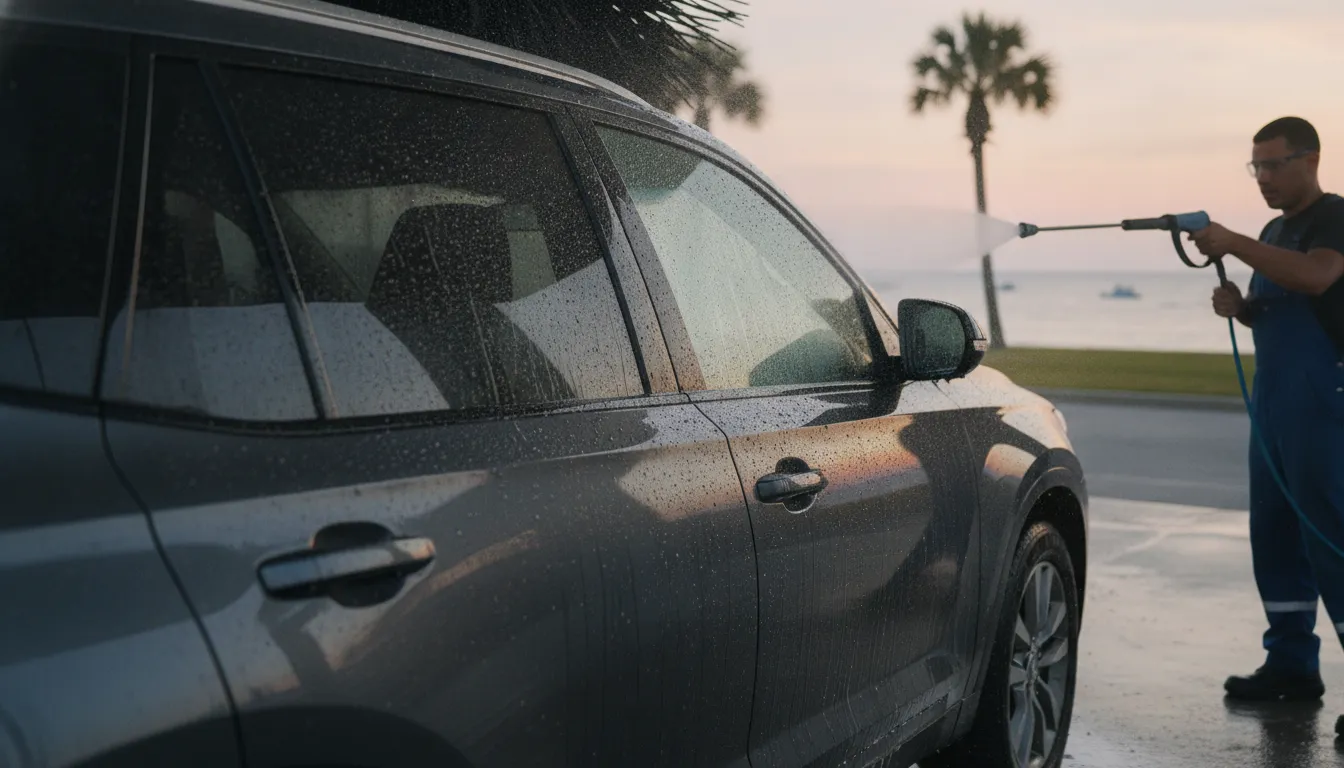
Use a hose to spray down the body of the car. This removes salt spray from the air and keeps it from sitting on the paint.
Do a full wash weekly.
Use a soft mitt and car soap to clean every surface. This
that a simple rinse might miss.
- Focus on the underside.
Salt gets trapped in the chassis and suspension parts. Make sure to spray these areas well to prevent deep-level rust.
- Dry the car by hand.
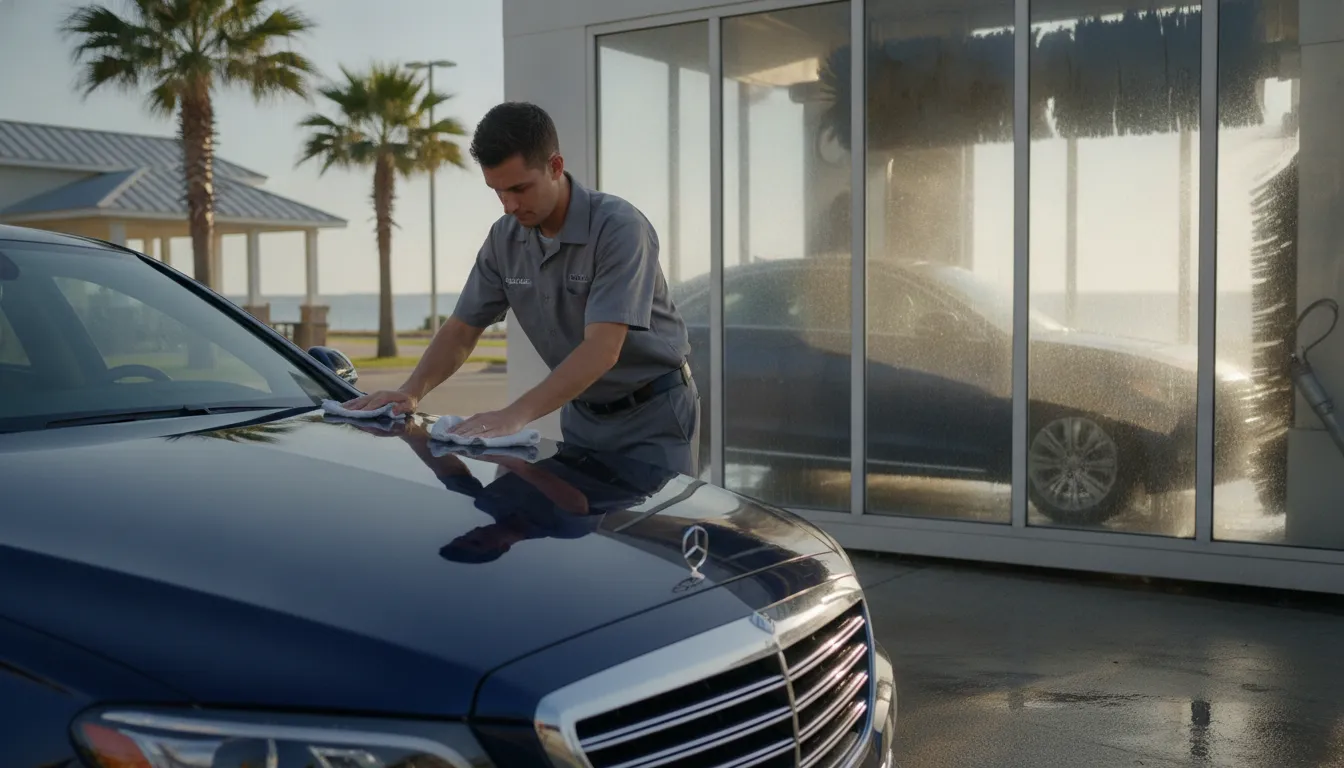
Use a clean cloth to dry the paint. This stops water spots and ensures no salt is left in the damp areas.
- Check for paint chips.
Look for small nicks or scratches where salt could reach the metal. Fix these quickly to stop rust from spreading.
- Apply a coat of wax.
Wax provides a thin barrier that makes it harder for salt to bond with the paint.
- Book an expert cleaning.
A deep clean from a pro can find and fix salt damage before it gets worse.
Get expert help for long term protection
Sometimes, a home wash is not enough to stop the damage. Expert tools and soaps can reach spots that a garden hose cannot. You can get professional detailing to protect your paint and restore its shine. This expert care helps your car stay strong against the humid coastal air for many years.
How Does Ceramic Coating Protect Against Salt Air and Environmental Contaminants?
Living on the Mississippi Gulf Coast means your car deals with salt air every day. This salty air has many chloride ions that make metal rust fast. In wet coastal areas, this salt spray makes paint wear down even quicker. Without a strong guard, salt air paint damage can ruin your car's look and value in just a few years. Studies show that salt air leads to blisters and rust on steel parts. This happens when salt sits on the paint and starts to eat away at the metal below.
A tough shield for your paint
Classy Ceramics acts as a hard shell over your car's clear coat. Unlike wax, this coating bonds with the paint on a tiny level to block out grime. It stops salt from getting into the small gaps in your paint. This shield helps prevent the dull look that salt often causes to cars in our town. Our ceramic coating is built to handle the heat and salt found in Biloxi and Gulfport. It creates a flat, glass-like layer that dirt and salt cannot grip. This means your car stays cleaner for a longer time between each wash.
Most cars have a clear coat, but it is not enough to stop the harsh Gulf air. The salt can trap moisture against the paint, which starts the rust process. By adding a ceramic layer, you give your car an extra wall of safety. This wall is much harder than the clear coat that comes from the shop. It can withstand the tiny bits of sand and salt that blow off the beach. Your paint stays bright and shiny even when the weather is at its worst.
Stopping salt damage early
Salt damage builds up over time, so you need a plan that lasts. A good coating keeps the surface slick, so salt does not stick as easily. This makes it much harder for deep rust to start on your doors and hood. Using the right care helps you find early signs of wear before they become big, costly problems. A slick finish also means you can wash away salt with less work during your next trip to the car wash. You will notice that water beads up and rolls off the surface fast.
When salt air stays on your car for too long, it can lead to deep pits in the paint. These pits are hard to fix and can lead to costly body work. A ceramic shield fills in the low spots on your paint to make it smooth. This smooth surface makes it hard for salt to find a place to stay. By keeping the salt off the metal, you stop rust before it has a chance to form. It is a smart way to protect the money you put into your car.
Feature. | Ceramic Coating. | Old-Style Wax. | No Coating. |
Salt Guard. | Very high. | Low barrier. | None. |
Bond Type. | Long-term bond. | Sits on top. | None. |
How Long It Lasts. | Years of care. | Few weeks. | N/A. |
Upkeep. | Easy to clean. | Needs new coats. | Hard to wash. |
Surface Feel. | Slick and hard. | Oily or soft. | Rough and dry. |
Keeping your car clean is the first step to stop salt from hurting the paint. But for the best results, you need a layer that does not wash off. Old-style wax can melt in the Mississippi sun, leaving your car open to the air. A ceramic layer stays strong through heat and rain. This long-term care keeps your car looking new and saves you money on repairs later. It is the best choice for anyone living near the ocean who wants to keep their car in top shape.
Frequently Asked Questions
Is salt air damaging your car paint a myth or a fact?
It is a fact that salt air leads to real paint damage on the Mississippi Gulf Coast. Salt holds onto moisture and keeps it against your car surface. As stated by the NIH, high moist air and salt spray work at once to speed up metal rust. This process breaks down the clear coat and lets salt reach the metal below. Over time, this causes deep damage that is hard to fix.
What are the common signs of salt air damage on painted surfaces?
You may first see a dull or cloudy look on your car paint. This happens when salt wears down the clear coat. Other signs include small white spots or a rough feel to the touch. If the damage gets worse, you will see paint bubbling or peeling. These signs show that salt and moisture have reached the metal and started to cause rust. Local detailing helps you find these issues early.
Why does salt trapped behind paint cause bubbling and peeling?
When salt gets under the paint through small chips, it starts to eat away at the metal. This process is called rust. As the metal rusts, it grows and pushes the paint away from the surface. Research from the NIST shows that this creates blisters or bubbles. Once the paint peels off, the bare metal has no shield. This leads to even faster rust and body loss for your car.
Can a paint job on a car be saved from salt corrosion?
Yes, you can save your car paint if you act fast. Minor damage often comes off with a deep clean and a new wax layer. For better shield, a ceramic coating acts as a guard against the salt air. If you see deep rust or large areas of peeling paint, you may need expert repair. The best way to stop damage is to wash your car often and use high quality paint seals.
Ready to shield your car from Gulf Coast salt air?
If you do not wash the salt off your car soon, the salty air will slowly eat into the paint and cause deep rust. This damage is very hard to fix and will lower the price of your car if you do not stop the salt right now. Taking care of your paint today is the best way to keep it safe from the sea air and stay looking new. Steady care will stop the salt from sticking and help you avoid the high cost of a new paint job down the road.
Ready to join our Unlimited Wash Club? Visit one of our express wash locations today to protect your paint and keep your car safe from salt.

Comments