

Protect Car Paint From Sun Damage on the Mississippi Coast

The Mississippi Gulf Coast sun is relentless. Between the intense UV exposure, coastal humidity, and salt air blowing in from the Gulf, your vehicle's paint takes a beating every single day. Fading, oxidation, and clear coat failure are not a matter of if but when for cars parked or driven daily in places like Biloxi, Gulfport, Ocean Springs, and D'Iberville. The good news is that protecting your car's finish is completely doable. Whether you want a quick wax every few months or a permanent ceramic coating that blocks UV damage for years, the right approach depends on your budget, your time, and how much you care about keeping that factory shine.
How UV Rays and Heat Break Down Car Paint
Sun damage is not a single event. It is a slow chemical process that starts the first time your car sits in direct sunlight. UV radiation penetrates the clear coat layer and attacks the chemical bonds in the paint beneath it. Over time, those bonds break down. The result is oxidation, fading, and a dull, chalky appearance that no quick wash can fix.
Heat accelerates everything. On a summer afternoon on the Gulf Coast, surface temperatures on a dark-colored car can easily exceed 150 degrees Fahrenheit. That heat expands the paint and clear coat during the day, then contracts them at night. This constant thermal cycling creates microscopic cracks that let moisture and salt in. Once that starts, clear coat peeling and paint failure are not far behind.
What does sun damage actually look like?
Early signs are easy to miss. The paint loses its reflective depth. The color looks slightly washed out, especially on horizontal surfaces like the hood, roof, and trunk. As it worsens, you will see a chalky residue when you wipe the surface with your hand. In advanced cases, the clear coat flakes off in patches, exposing the base color layer to direct UV attack. At that point, only a respray or professional correction can bring it back.
Why Gulf Coast Conditions Make It Worse
The Mississippi Gulf Coast is not like other parts of the country. The combination of factors here is uniquely hard on automotive paint. The UV index in Biloxi and Gulfport averages high year-round, not just in summer. On top of that, relative humidity regularly sits above 70 percent. Moisture in the air accelerates oxidation by giving oxygen molecules more surface contact with the paint. Salt air from the Gulf adds an abrasive, corrosive element that digs into clear coat micro-cracks and speeds up degradation.
Beach traffic, sand blowing across parking lots, and road salt during the rare freeze all add mechanical abrasion that strips away whatever protective layer you have on the paint. A car that spends its life on Highway 90 between Biloxi and Ocean Springs is exposed to more environmental stress than the same car driven inland.
Wax: The Classic Short-Term Option
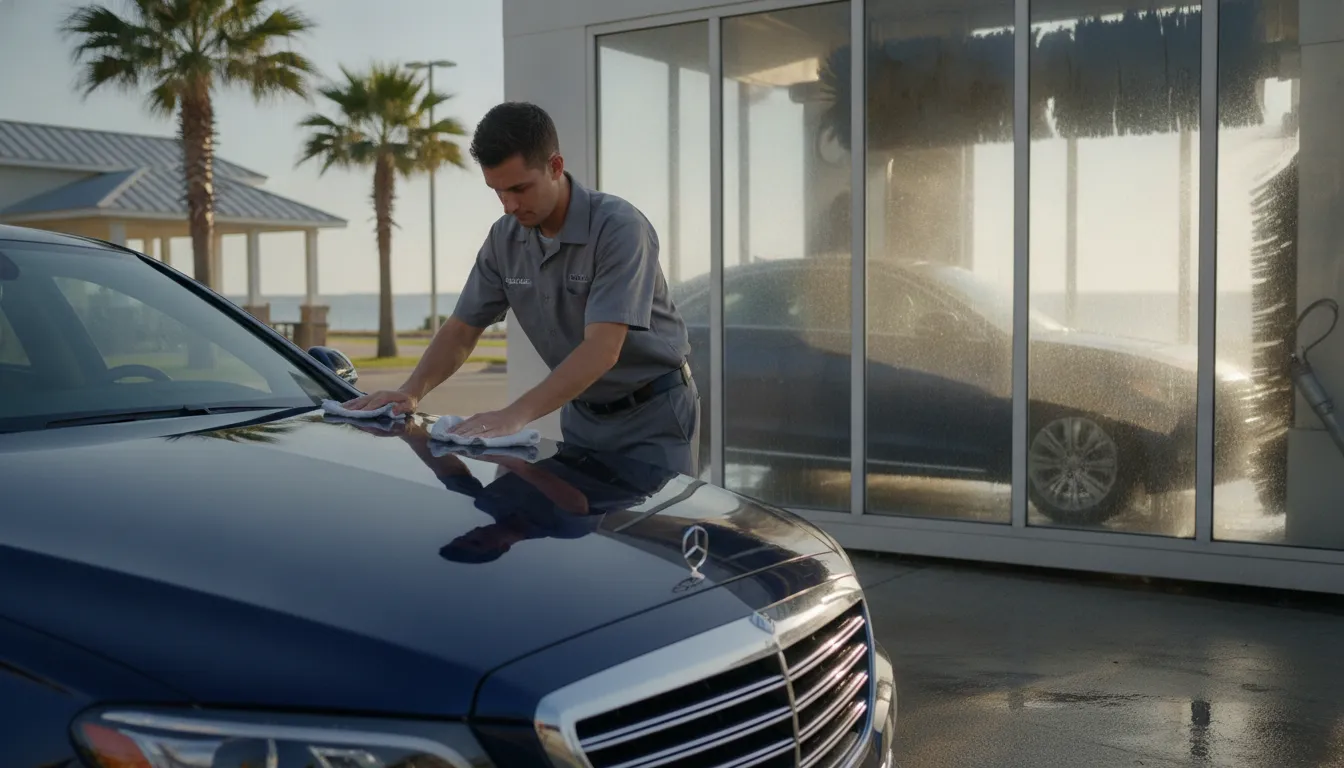
Carnauba wax has been the go-to paint protection for generations, and it works well for what it is. A quality wax application gives your car a deep, warm shine and adds a thin sacrificial layer that blocks UV rays for a few weeks. It also helps water bead off the surface, which reduces the time moisture spends sitting on the paint.
The downside is durability. On the Gulf Coast, a wax layer typically lasts two to four weeks before it starts breaking down. Heat melts it. Rain washes it off. Automated car washes strip it faster. To maintain continuous protection, you need to rewax every month or so. That adds up in both time and product cost over a year. Wax is a fine option if you enjoy the process and do not mind the frequency, but it is not a set-it-and-forget-it solution.
Paint Sealants: Stronger, Longer, but Not Permanent
Synthetic paint sealants are a step up from wax. They are polymer-based rather than natural, which means they bond more tightly to the clear coat and resist heat and moisture better. A quality sealant can hold up for three to six months under normal conditions, though Gulf Coast weather shaves some of that lifespan off.
Sealants provide strong UV reflection and decent chemical resistance. They also create a slick surface that makes future washing easier. The trade-off is appearance. Sealants lack the warm, deep gloss that carnauba wax gives. For many drivers, that is a fair price for not having to wax every three weeks. Sealants are a solid middle ground between wax and more permanent options.
Ceramic Coating: The Gold Standard for UV Protection
Ceramic coating is a liquid nano-ceramic polymer that bonds chemically with your vehicle's factory clear coat. Once cured, it forms a permanent, semi-permanent glass layer that is about three times harder than the clear coat itself. This layer blocks UV radiation from ever reaching the paint underneath. It also repels water, dirt, and contaminants, which keeps the surface cleaner between washes.
A properly applied ceramic coating can last two to seven years depending on the product tier and how well the vehicle is maintained. That makes it the most cost-effective option over time, especially for daily drivers on the Gulf Coast where conditions are harsh. Unlike wax, ceramic coating does not wash off or degrade from heat. It stays put until the layer is physically worn down, which takes years of normal driving and washing.
The application process requires careful paint preparation. The surface must be decontaminated, polished, and perfectly clean before the coating goes on. That is why professional installation matters. At Classy Chassis, ceramic coating includes a full vehicle inspection to assess the paint condition and provide a legitimate, customized estimate. Pricing starts at $500, and every vehicle is evaluated in person before a quote is given because each car's paint condition is different.
What Does UV Protection Look Like on a Budget?
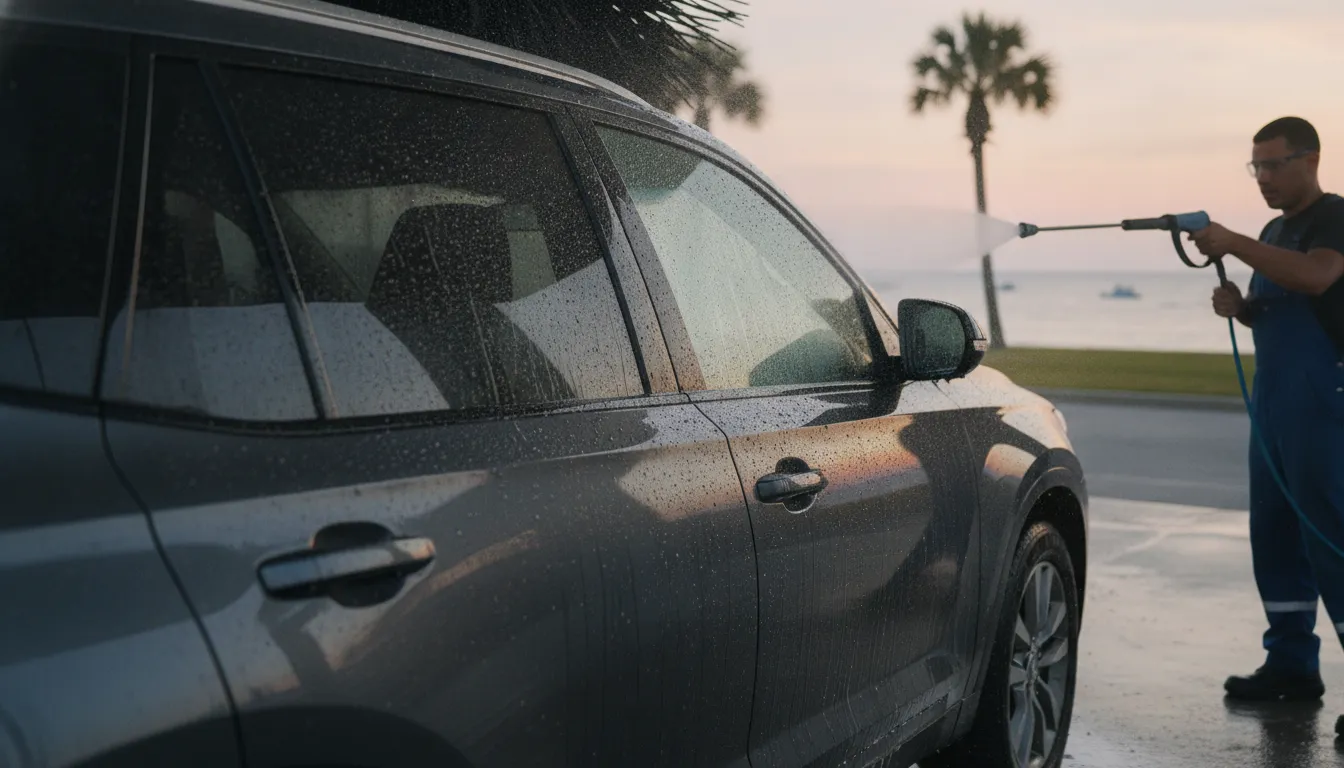
Not everyone is ready to invest in ceramic coating, and that is fine. There are effective lower-cost steps you can take. Regular washing is the foundation. Dirt and contaminants trap moisture against the paint, which accelerates UV damage. A weekly express wash at Classy Chassis removes that layer of grime before it can do lasting harm.
Parking in the shade or using a car cover adds a physical barrier that blocks UV rays entirely. It is not always practical, especially during a workday in Biloxi or Gulfport, but even partial shade helps. A quality sunshade for the windshield also protects the dashboard and interior from cracking and fading, which are separate but related forms of sun damage.
For drivers who want better protection without the cost of ceramic coating, the unlimited wash membership is a strong option. Regular washing combined with a twice-yearly wax or sealant application provides solid protection for most daily drivers. Signing up for an unlimited wash plan is another option for ultimate savings, ensuring your car stays clean and protected without recurring per-visit costs.
Can the Sun Damage Your Car Paint Beyond Repair?
Yes, and the timeline is shorter on the Gulf Coast than you might think. A car that is never washed, never waxed, and parked in direct sunlight year-round can show noticeable clear coat failure within three to five years. Once the clear coat is gone, the base color layer is exposed. At that point, oxidation accelerates rapidly. The paint turns chalky, uneven, and cannot be restored without wet sanding or a full repaint.
The good news is that UV damage is almost entirely preventable. Consistent protection from wax, sealant, or ceramic coating stops the process before it starts. Even a thin layer of wax that is reapplied monthly will keep UV rays from reaching the clear coat. The key is consistency. Sporadic protection leaves gaps where damage can take hold.
Can Car Wax Protect Paint from Sun?
Yes, but only for a short window. Carnauba wax contains natural UV reflectors that block a portion of the sun's rays. The limitation is durability. On the Gulf Coast, that protection lasts two to four weeks at most. If you are willing to wax every month, it works. If you want something that lasts through the summer without reapplication, ceramic coating or a paint sealant is a better fit.
Does Ceramic Coating Protect Car Paint from Sun?
Absolutely. Ceramic coating is specifically engineered to block UV radiation. The nano-ceramic layer reflects and absorbs UV rays before they reach the clear coat. It also handles the heat and humidity that break down wax and sealants over time. For Gulf Coast drivers, ceramic coating is the single most effective long-term defense against sun damage. The initial investment is higher than wax, but the cost per year of protection is lower, and the peace of mind is real.
What Is the Best Car Paint Protection for Sun?
The best protection depends on your priorities. For maximum durability with minimal maintenance, a professional-grade ceramic coating is the clear winner. For a strong middle ground that lasts a few months and costs less upfront, a high-quality paint sealant works well. For drivers who enjoy detailing and do not mind frequent applications, traditional wax delivers excellent aesthetics with decent short-term protection.
Many Gulf Coast drivers choose a layered approach. Ceramic coating as the base layer, with a topper wax applied every few months for extra depth and gloss. That combination gives you years of UV protection with the warm shine that only wax provides.
Keep Your Paint Protected Year-Round
Sun damage to car paint is not a maybe. On the Mississippi Gulf Coast, it is a guarantee unless you take steps to prevent it. Whether you choose wax every month, a synthetic sealant twice a year, or a multi-year ceramic coating, the important thing is to start before the damage shows. Once the clear coat is gone, restoration is expensive. Prevention is not.
Contact Classy Chassis Express Car Wash for a ceramic coating consultation or stop by one of our Biloxi, Gulfport, or Ocean Springs locations. We have been protecting Gulf Coast vehicles for over 30 years and know exactly what it takes to keep your paint looking new.

Comments